
Fast return to service, color that holds
Polyaspartic Floor Coatings in Houston, TX
A coating that cures in hours, not days, and stays clear where sunlight hits the floor.
- Free on-site estimates across the Houston area
- Moisture testing on the slab before any coating goes down
- Written quotes that spell out the prep and every coat
When a Faster, Sun-Stable Coating Makes Sense
Polyaspartic Floor Coatings are the answer to two complaints people in Houston have about standard epoxy: it takes too long to cure and it turns yellow in the sun. A polyaspartic floor coating belongs to the polyurea family of resins. It cures quickly, stays clear under UV light and stands up well to scuffing and chemicals. It serves as the topcoat on our epoxy and flake systems, and as a complete system on its own when speed or sun exposure is the main concern.
Sun is the first reason
In the HomeGuide polyaspartic cost guide, polyaspartic earns an excellent mark for UV resistance; epoxy scores only poor to fair on the same measure. That matters on any floor the sun reaches: a garage with the door open in the afternoon, a patio, a covered porch or a pool deck. Houston gets plenty of sun and heat, with Bush Intercontinental at 90F or more on an average of 106.5 days a year. Under that kind of exposure, an epoxy topcoat can yellow and chalk, while polyaspartic keeps its color. If any part of your floor sees daylight, a polyaspartic top is worth the extra cost.
Speed is the second
By HomeGuide's count, polyaspartic is fully cured after 1 to 2 days and can carry heavy vehicles at 24 to 48 hours; epoxy can run to seven days. Bob Vila's guide gives polyaspartic 3 to 4 hours for foot traffic and 24 hours for cars, against 12 hours and 3 days for epoxy. In a household with two cars and a single garage, that gap separates a weekend job from a week of driveway parking. For a business it means less downtime, and Bob Vila points out that a business may be closed for as little as a day or two.
Fast cure cuts both ways
The same fast chemistry that gets you back on the floor sooner leaves the installer less working time. In a hot Houston garage, a batch of polyaspartic can start to set in the bucket and on the floor quickly, and humidity affects how it cures. This is one reason Bob Vila calls it a coating that is not for DIY. We plan smaller batches, check slab and air conditions before mixing and work in sections with enough people to keep a wet edge. On the hottest days, we start early. That planning is part of what you pay for.
Thinner coats, so prep matters more
Per HomeGuide, a polyaspartic coat is 2 to 6 mils thick, where an epoxy coat runs 10 to 20 mils. Thin coats do not hide much, so the slab has to be prepared well: diamond ground, with cracks and pits filled. Wikipedia describes Houston as sitting on clay-silt prairie soils that swell and shrink, and garage slabs here often have cracks that need attention first. On rough or damaged floors, we often recommend an epoxy base to build thickness and fill flaws, then finish with polyaspartic on top to take the wear and the UV. On a sound slab, a polyaspartic system can go down with fewer layers.
Moisture still comes first
A fast cure does not protect against moisture coming up from below. A slab that reads high will push vapor into any coating, polyaspartic included. We test every floor first. When moisture is a concern, we use a primer made to block vapor and then build the polyaspartic system over it. If a garage has recently flooded, which happened to many homes during Harvey and other storms, we may recommend waiting until the slab has dried before coating.
Is polyaspartic worth it?
HomeGuide puts polyaspartic at $5 to $12 per square foot against $4 to $10 for epoxy, and lists a lifespan of 10 to 20 or more years. You are paying for color stability, abrasion resistance and fewer days off the floor. For an interior room that never sees the sun, epoxy may be enough. For a sunny garage, a patio or a floor you cannot be without for a week, polyaspartic is usually the better fit. We will tell you honestly which side of that line your floor is on.
Polyaspartic outside the garage
The same traits that make polyaspartic a good garage topcoat make it useful in other places around a Houston home. Covered patios and back porches get angled morning or evening sun that would yellow an epoxy finish, and polyaspartic holds its color there. Laundry rooms and mudrooms see water and detergent, which a hard, sealed topcoat shrugs off. Small commercial spaces such as salons, offices and small retail stores use it because they can reopen sooner. For pool decks we usually suggest a textured system made for bare feet and full sun, but a polyaspartic topcoat can still play a part. Tell us every surface you are thinking about, and we will suggest where polyaspartic fits and where something else will serve you better.
Where We Use Polyaspartic
Polyaspartic can serve as the entire system, or only as the top layer that takes the wear.
Clear topcoat over epoxy
A UV-stable, scuff-resistant layer over an epoxy base or flake broadcast.
Full polyaspartic system
Every layer, from base to broadcast to topcoat, is polyaspartic, so the floor is back in service soonest.
Sunny garages
Floors where the afternoon sun comes through the open door and would yellow epoxy.
Covered patios and porches
Outdoor concrete that sees daylight, foot traffic and rain.
Light commercial floors
Shops, offices and service areas that cannot close for a week.
Moisture-primed slabs
Systems built over a vapor-blocking primer on slabs that test damp.
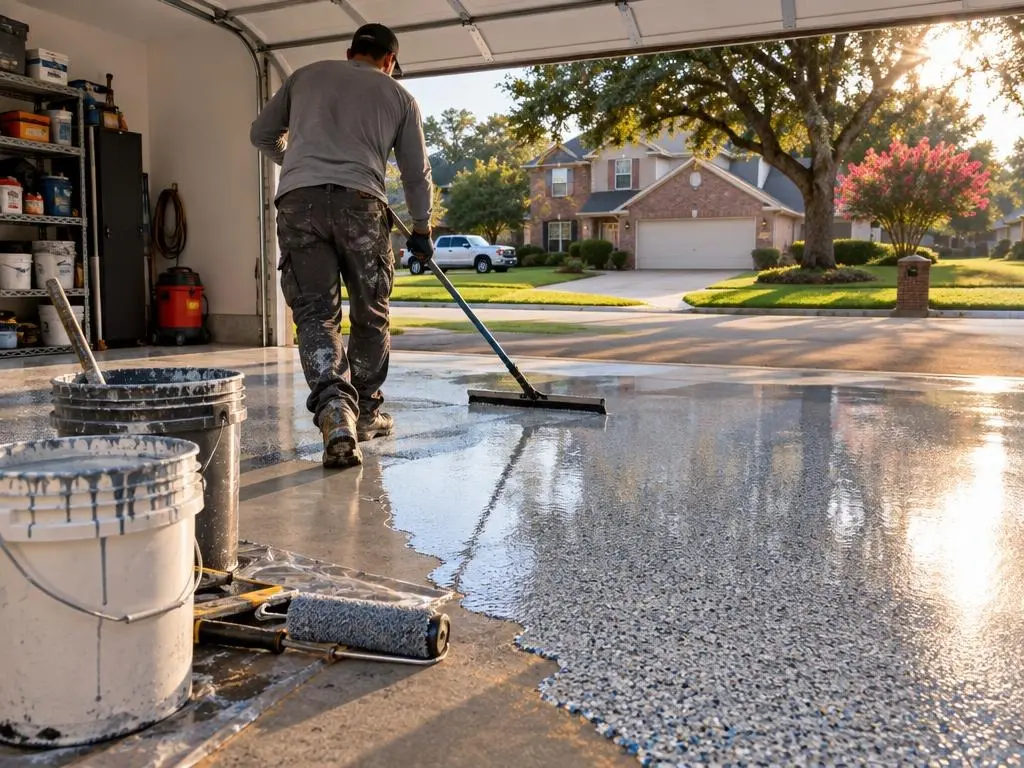
Typical Polyaspartic Coating Costs
| Area or item | Published range | Source |
|---|---|---|
| Per square foot, installed | $5 to $12 | HomeGuide |
| One-car garage | $1,400 to $4,700 | HomeGuide |
| Two-car garage | $2,000 to $6,900 | HomeGuide |
| Three-car garage | $2,900 to $10,400 | HomeGuide |
| 300 square feet | $1,500 to $3,600 | HomeGuide |
| 600 square feet | $3,000 to $7,200 | HomeGuide |
| Typical project | $1,440 to $3,240 | Bob Vila |
Both guides publish national figures, and they differ from each other. Slab repair, moisture primers and the layers you choose decide your total, which we put on a written estimate that is the actual price.
How We Install Polyaspartic
1. Test and measure
We test slab moisture, measure the floor and check where sun reaches it.
2. Prep
Diamond grinding and crack filling, since thin coats show every flaw.
3. Condition check
On install day we read slab and air temperature and humidity and plan batch sizes.
4. Coat in sections
We apply the system in sections with a crew sized to keep a wet edge.
5. Back in use
You get walk and drive times for your floor, often within a day.
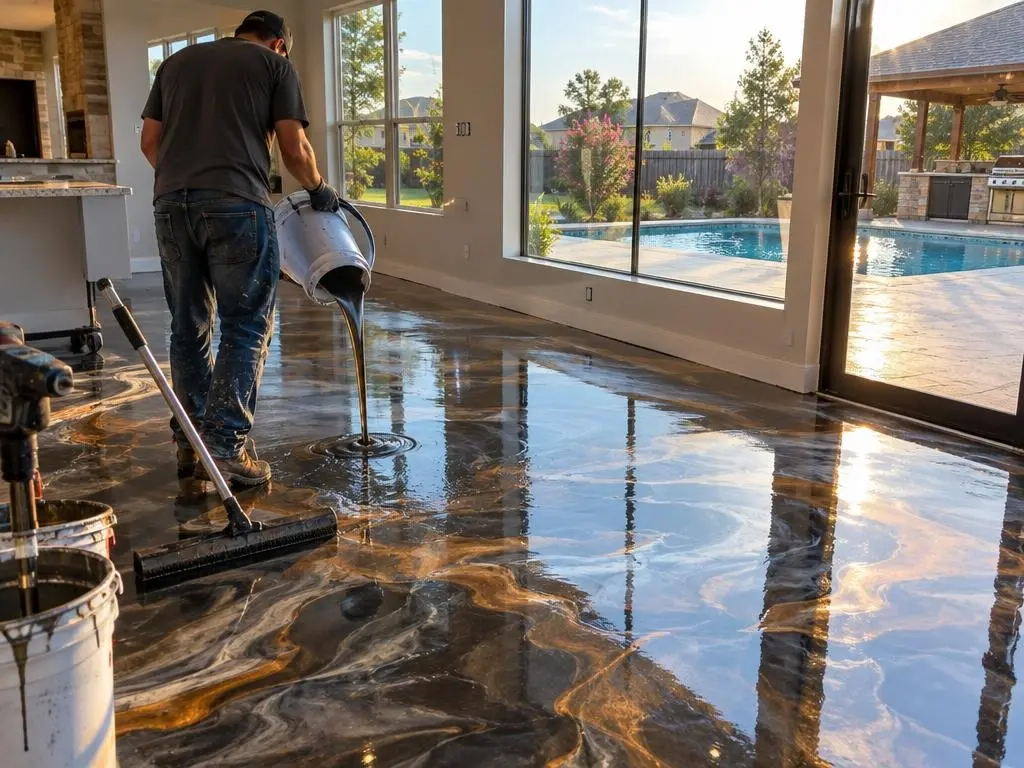
Why Choose Us for Polyaspartic Floor Coatings
Planned for the heat
Small batches and early starts keep a fast-curing coating from setting before it is spread.
Honest about when to use it
If epoxy alone suits your floor, we tell you and save you the difference.
Prep matched to thin coats
Grinding and filling are done carefully because polyaspartic does not hide flaws.
Polyaspartic Floor Coatings Questions
For a Houston garage, does polyaspartic beat epoxy?
Usually yes as a topcoat when the garage gets sun or has to be usable again soon, because it resists UV and cures in a day or two. Epoxy still builds thickness for less money, so plenty of floors pair an epoxy base coat with polyaspartic on top.
When is a polyaspartic floor ready to drive on?
HomeGuide lists heavy vehicle traffic at 24 to 48 hours, and Bob Vila puts vehicles at about 24 hours. We give you the exact time for your system and the weather on install day.
Does humidity affect polyaspartic?
Yes. Humidity and heat change how fast it cures and how long it can be worked. We check conditions before mixing and size batches to the day.
Can I install polyaspartic myself?
It is hard to do well. Bob Vila describes it as not a DIY product, because the short working time leaves little room for error.
How long does a polyaspartic floor coating last?
HomeGuide gives a lifespan of 10 to 20 or more years. Where a given floor lands depends on prep, slab moisture and use.
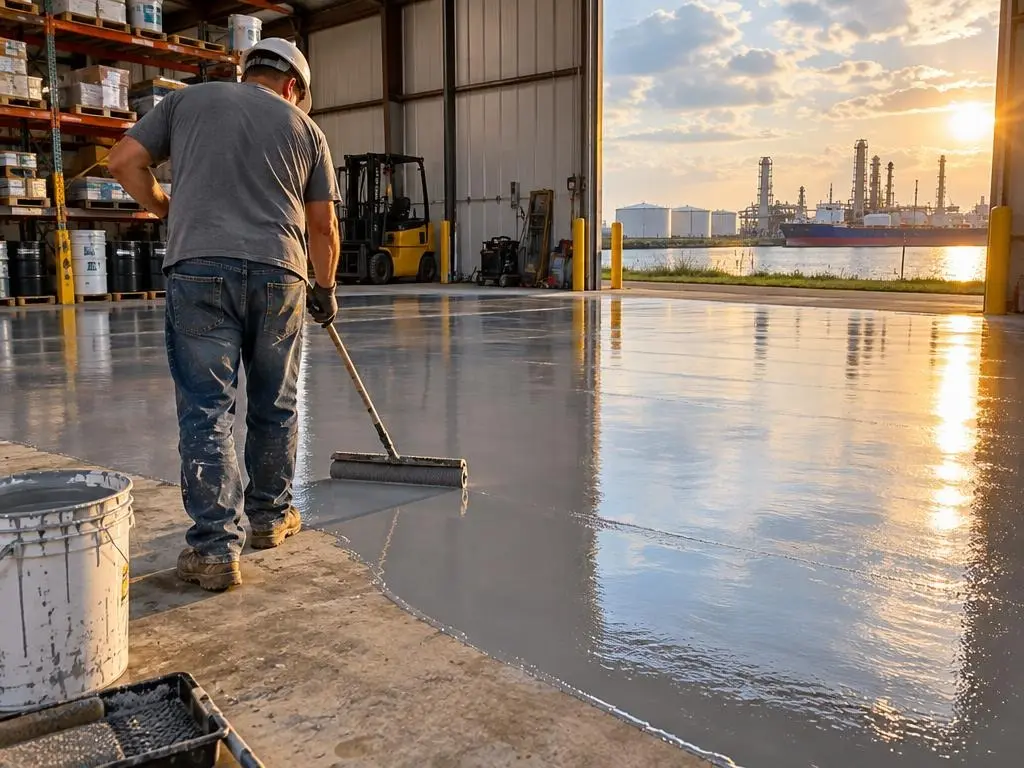
Polyaspartic Floor Coatings Service Areas
- Epoxy Flooring in Houston, TX
- Epoxy Flooring in The Woodlands, TX
- Epoxy Flooring in Spring, TX
- Epoxy Flooring in Humble, TX
- Epoxy Flooring in Kingwood, TX
- Epoxy Flooring in Atascocita, TX
- Epoxy Flooring in Cypress, TX
- Epoxy Flooring in Tomball, TX
- Epoxy Flooring in Pasadena, TX
- Epoxy Flooring in Baytown, TX
- Epoxy Flooring in League City, TX
- Epoxy Flooring in Friendswood, TX
- Epoxy Flooring in Webster, TX
- Epoxy Flooring in Seabrook, TX
- Epoxy Flooring in La Porte, TX
- Epoxy Flooring in Deer Park, TX
- Epoxy Flooring in Conroe, TX
- Epoxy Flooring in Jersey Village, TX
- Epoxy Flooring in Channelview, TX
- Epoxy Flooring in Magnolia, TX
- Epoxy Flooring in Spring Valley Village, TX
- Epoxy Flooring in Hunters Creek Village, TX
- Epoxy Flooring in Clear Lake City, TX
Get a Polyaspartic Floor Coatings Estimate
Free estimates for polyaspartic coatings in Houston and nearby towns.